

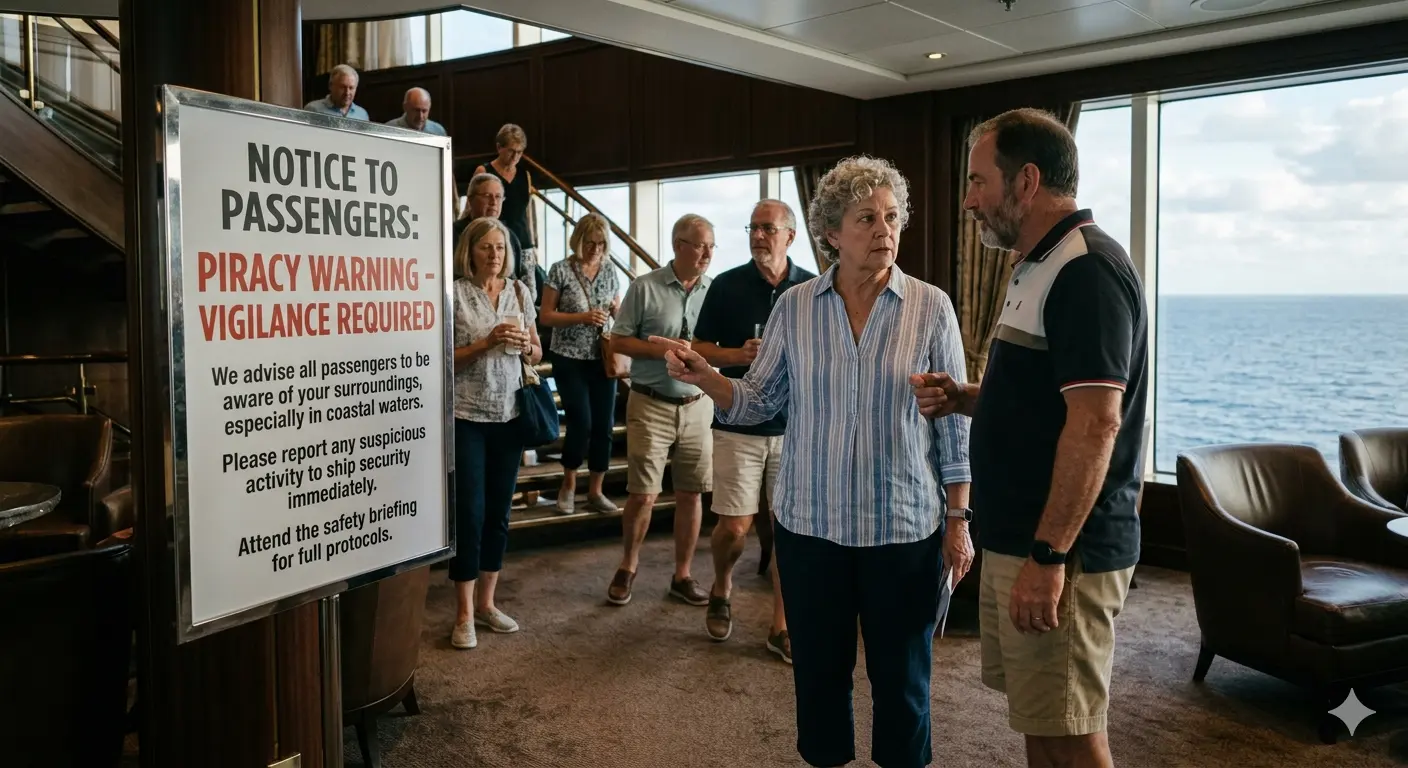
For many travellers, a luxury cruise represents the ultimate escape. Imagine gliding across calm seas, enjoying gourmet dining, spa treatments, and breathtaking ocean views while visiting some of the world’s most beautiful destinations. Yet behind this image of relaxation and elegance, a more serious concern has started to appear in maritime news: the piracy warning luxury cruise passengers may receive when sailing through certain international waters.
In recent years, maritime authorities and cruise operators have issued more frequent advisories about potential piracy risks in specific regions. While the probability of an actual attack on a large cruise ship remains extremely low, the warnings highlight the complex security environment that exists in parts of the world’s oceans. For passengers, hearing such alerts can be surprising—especially when their vacation is meant to be carefree.
Understanding why these warnings occur, what they mean for travellers, and how cruise companies protect their guests can help put the issue into perspective. This article explores the background behind piracy alerts, the regions where they are most common, and the sophisticated safety measures cruise lines implement to ensure passengers remain safe while enjoying their journey.
The Growing Attention Around Piracy Risks at Sea
Although modern maritime travel is far safer than it was centuries ago, piracy has not completely disappeared. In fact, certain regions of the world still experience incidents involving commercial vessels, cargo ships, and fishing boats. These incidents have drawn increasing attention from governments and maritime organizations.
When a piracy warning luxury cruise passengers alert is issued, it usually stems from intelligence reports gathered by naval forces, shipping agencies, and international maritime security networks. These organizations monitor suspicious activity and potential threats along major shipping routes.
Piracy incidents today often involve smaller vessels targeting slower-moving cargo ships rather than large cruise liners. However, cruise operators still take the warnings seriously. Even if the risk is minimal, the safety of thousands of passengers and crew on board demands careful planning.
The modern cruise industry operates globally, meaning ships sometimes pass through areas that have historically seen piracy activity. When this happens, cruise lines coordinate with maritime authorities and adjust security protocols accordingly.
For travellers, the key point is that warnings are typically precautionary rather than indicators of imminent danger. They represent part of the broader safety system designed to prevent incidents before they occur.
Regions Where Piracy Warnings Are Most Common
Piracy alerts do not occur randomly. They are usually associated with specific maritime regions where criminal groups have operated in the past.
Several areas frequently mentioned in security advisories include:
- Parts of the Indian Ocean
- Waters near the Horn of Africa
- Certain regions of Southeast Asia
- Areas within the Gulf of Guinea
These regions are home to busy shipping lanes connecting global trade routes. Cargo ships carrying valuable goods are often the primary targets for piracy groups.
Luxury cruise ships, on the other hand, are rarely targeted due to their size, speed, and onboard security measures. Nevertheless, cruise lines still inform passengers if the vessel will travel near a region where piracy activity has historically occurred.
In many cases, ships may also alter their route slightly to avoid higher-risk waters. These adjustments are usually subtle and do not significantly affect the overall itinerary for passengers.
Why Luxury Cruise Ships Are Rarely Targeted
Despite occasional warnings, luxury cruise ships remain among the least attractive targets for modern pirates. Several factors contribute to this.
First, cruise ships are extremely large and highly visible. Approaching such a vessel unnoticed is almost impossible. They also travel at speeds that small pirate boats struggle to match.
Second, cruise ships carry thousands of people, including trained security personnel. Any attempted boarding would be far more complex than targeting a small cargo vessel with a minimal crew.
Third, international naval patrols operate in many regions where piracy once flourished. These patrols significantly reduce the likelihood of successful attacks.
When a piracy warning luxury cruise passengers notice is issued, it is usually part of a proactive communication strategy rather than an indication that the ship itself is under threat.
In reality, the cruise industry has an impressive safety record when it comes to piracy incidents.
Security Measures Cruise Lines Use to Protect Passengers
Modern cruise ships are equipped with extensive security systems designed to detect and deter threats at sea. Many passengers are unaware of how sophisticated these measures have become.
Security protocols often include:
- 24-hour surveillance systems monitoring the ship’s perimeter
- Advanced radar technology capable of identifying approaching vessels
- Restricted access areas to control movement around sensitive parts of the ship
- Crew training programs focused on emergency response and maritime security
- Coordination with naval forces when sailing near higher-risk areas
In addition, some cruise ships implement visible deterrents when passing through regions with piracy alerts. These may include enhanced lighting at night, additional security patrols, and adjustments to deck access.
Passengers rarely notice most of these precautions because they are designed to operate quietly in the background while maintaining the relaxing atmosphere expected on a luxury cruise.
What Passengers Are Told During a Piracy Warning
When a cruise ship enters waters where a piracy advisory exists, passengers may receive a brief announcement or written notice explaining the situation. These communications are typically calm and informative rather than alarming.
The message usually emphasizes that the ship is following recommended safety procedures and that the likelihood of any incident remains extremely low.
Passengers might be asked to follow a few simple precautions, such as:
- Avoid leaving cabin lights on with curtains open at night
- Follow instructions regarding deck access during specific hours
- Pay attention to onboard announcements
These steps are primarily precautionary and designed to minimize visibility or vulnerability while sailing through sensitive regions.
For most travellers, the advisory passes quickly and has little impact on their cruise experience.
How Maritime Authorities Monitor Piracy Threats
The global response to piracy involves cooperation between governments, naval forces, and international organizations. Several agencies track piracy activity in real time and share information with shipping companies.
These organizations maintain monitoring centres that gather intelligence from ships, satellites, and regional authorities. When suspicious activity is detected, warnings may be issued to vessels traveling through nearby waters.
The information allows cruise lines and cargo operators to adjust routes, strengthen security measures, and stay informed about evolving risks.
International naval missions also patrol high-risk zones. These patrols have significantly reduced piracy incidents in areas that were once considered dangerous.
As a result, many piracy warnings are preventive alerts rather than responses to active threats.
The Psychological Impact of Piracy Warnings on Travellers
Even though the risk is low, hearing about piracy can make some passengers uneasy. Cruise vacations are designed to be relaxing, so the idea of maritime crime may seem unsettling at first.
However, experienced cruise travellers often understand that such warnings reflect transparency rather than danger. Cruise companies prefer to keep guests informed rather than ignore potential concerns.
Travel psychology experts note that clear communication helps reduce anxiety. When passengers know that safety protocols are in place, most quickly regain confidence in the voyage.
In fact, many travellers later describe the experience as an interesting reminder of the vast and complex world of international maritime travel.
How the Cruise Industry Has Adapted to Modern Maritime Risks
Over the past two decades, the cruise industry has significantly improved its approach to maritime security. Lessons learned from global piracy incidents have shaped new policies and technologies designed to prevent problems before they occur.
Key adaptations include:
- Stronger collaboration with international naval forces
- Improved intelligence-sharing systems
- Enhanced onboard security training for crew members
- Technological upgrades in ship surveillance systems
Cruise companies also participate in international maritime security programs that establish guidelines for safe navigation through sensitive waters.
Because of these developments, cruise ships today operate with far greater situational awareness than ever before.
The result is a travel experience that remains both luxurious and secure.
The Future of Cruise Security and Maritime Safety
As global travel continues to grow, the cruise industry will likely keep refining its approach to maritime security. Advances in satellite tracking, artificial intelligence, and predictive analytics are already helping shipping companies identify potential risks earlier.
These technologies allow ships to receive real-time updates about suspicious activity in nearby waters. They also enable better coordination between cruise lines and international security organizations.
For passengers, the future of cruising will likely involve even more advanced safety systems working quietly behind the scenes.
While piracy warnings may occasionally appear in travel news headlines, the reality is that modern cruise ships are among the safest forms of international travel.
Conclusion
The phrase piracy warning luxury cruise passengers might sound dramatic, but in most cases it reflects precaution rather than immediate danger. Maritime authorities and cruise companies work closely together to monitor global shipping routes and ensure that passengers remain safe while exploring the world’s oceans.
Luxury cruise ships are rarely targeted by pirates due to their size, speed, and advanced security systems. When warnings do occur, they usually result in minor precautionary measures that have little effect on the overall travel experience.
For travellers, understanding the context behind these alerts can transform concern into reassurance. The cruise industry invests heavily in safety technology, crew training, and international cooperation to protect everyone on board.
Ultimately, the occasional piracy warning luxury cruise passengers hear is simply another example of how seriously the maritime industry takes security. With careful planning and global collaboration, millions of travellers continue to enjoy unforgettable journeys across the seas every year.
FAQs
1. What does a piracy warning on a cruise ship mean?
A piracy warning indicates that the ship is traveling near a region where maritime authorities have reported potential piracy activity. It is typically a precautionary advisory rather than a sign of immediate danger.
2. Are luxury cruise ships at risk of pirate attacks?
Luxury cruise ships are extremely unlikely targets due to their large size, speed, onboard security, and the presence of many passengers and crew members.
3. What safety measures do cruise lines use against piracy?
Cruise ships use radar systems, surveillance cameras, trained security personnel, route planning, and coordination with naval forces to prevent potential threats.
4. Do piracy warnings affect cruise itineraries?
Sometimes cruise ships may slightly adjust their routes to avoid higher-risk waters, but these changes rarely impact the passenger experience significantly.
5. Should passengers worry if they hear a piracy warning?
In most cases, there is no reason for concern. The warning simply means the cruise line is following recommended security procedures to ensure passenger safety.
