

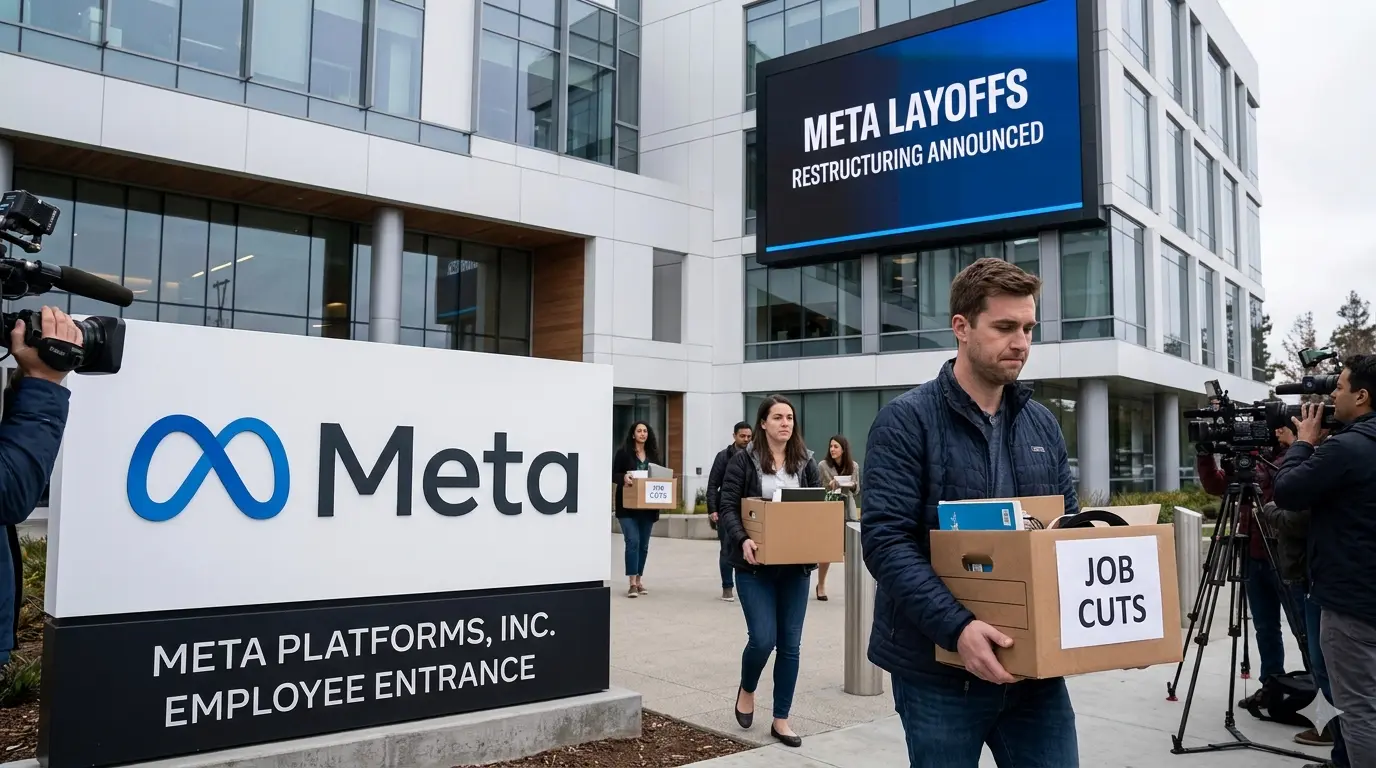
The story of meta layoffs has become one of the most discussed topics in the technology industry over the past few years. As one of the world’s largest tech companies, Meta Platforms—the parent company of Facebook, Instagram, and WhatsApp—employs tens of thousands of people worldwide. When a company of this scale announces layoffs, the ripple effects are felt across the global tech ecosystem.
In recent years, meta layoffs have highlighted a broader shift happening in the technology sector. After years of aggressive hiring and rapid expansion, many tech giants are reassessing their strategies, cutting costs, and focusing on efficiency. For Meta, the layoffs have been closely tied to changing market conditions, slowing digital advertising growth, and massive investments in emerging technologies such as the metaverse.
These decisions have sparked debates among analysts, employees, and investors alike. Are layoffs simply a cost-cutting measure during uncertain economic times, or do they signal deeper changes in how large tech companies operate?
Understanding the reasons behind Meta’s workforce reductions requires looking beyond the headlines. It involves exploring the company’s growth history, its strategic ambitions, and the economic pressures facing the global technology industry.
This article takes a detailed look at the meta layoffs, examining why they happened, how they affect employees and the tech sector, and what they might reveal about the future of work in Silicon Valley and beyond.
The Rise of Meta and Its Massive Workforce
To understand the context behind the meta layoffs, it’s important to look at the rapid expansion of the company over the past decade.
Founded by Mark Zuckerberg in 2004, Facebook quickly evolved from a university social network into one of the most influential technology companies in the world. As the platform grew, the company expanded aggressively, acquiring other major platforms and building a massive global workforce.
Key milestones in Meta’s growth include:
- The acquisition of Instagram in 2012
- The purchase of WhatsApp in 2014
- Heavy investment in virtual reality through Oculus VR
These moves transformed the company into a digital empire spanning social media, messaging, virtual reality, and digital advertising.
During the pandemic years, technology companies experienced unprecedented demand. Businesses shifted online, digital communication surged, and advertising spending grew. As a result, Meta and many other tech firms rapidly expanded their teams.
Between 2020 and 2022, Meta hired thousands of new employees across engineering, marketing, research, and infrastructure roles.
However, the pace of growth proved difficult to sustain when economic conditions began to change.
Why Meta Layoffs Began
The wave of meta layoffs did not happen overnight. Instead, it was the result of several overlapping challenges facing the company.
1. Slowing Digital Advertising Growth
Meta generates the majority of its revenue through digital advertising on Facebook and Instagram. But global economic uncertainty has led many companies to reduce marketing budgets.
When advertisers spend less, tech platforms feel the impact immediately.
2. Rising Competition
Competition has intensified in the social media space. Platforms like TikTok have rapidly gained popularity, especially among younger audiences.
This shift has forced Meta to rethink its strategy and invest heavily in new content formats like short-form video.
3. Massive Metaverse Investments
Another factor behind the layoffs is Meta’s long-term vision for immersive digital worlds.
Through its Reality Labs division, Meta has invested billions of dollars into virtual reality and metaverse technologies.
While the company sees this as the future of computing, these investments have created enormous financial pressure in the short term.
4. Economic Slowdown
Global economic uncertainty has forced companies across industries to adopt a more cautious approach. Rising interest rates, inflation, and market volatility have pushed many firms to cut costs.
In this environment, layoffs have become a common strategy to protect profitability.
The Largest Rounds of Meta Layoffs
When the first large-scale meta layoffs were announced, the news sent shockwaves across Silicon Valley.
The company reduced its workforce by thousands of employees in multiple waves.
Some key characteristics of these layoffs included:
- A focus on restructuring teams
- The elimination of certain projects or divisions
- A shift toward leaner operations
Meta described the process as part of a broader “year of efficiency” initiative designed to streamline the company.
According to leadership, the goal was to reduce bureaucracy, improve productivity, and prioritize the most important long-term projects.
Although layoffs are never easy, the company argued that the changes were necessary to remain competitive in a rapidly evolving industry.
The Human Impact of Meta Layoffs
Behind every headline about meta layoffs are thousands of individuals whose lives have been affected.
Employees who lost their jobs suddenly found themselves navigating a competitive tech job market. While many had strong skills and experience, the timing of layoffs across multiple companies made job searching more challenging.
The emotional and professional impact can be significant:
- Financial uncertainty
- Career disruption
- Stress and anxiety
- Relocation challenges for international workers
However, Meta offered severance packages and support programs to help affected employees transition to new opportunities.
Many former employees have since joined startups, smaller technology firms, or entirely new industries.
In some cases, layoffs have even sparked entrepreneurial ventures as former staff members launch their own companies.
How Meta Layoffs Reflect a Broader Tech Industry Trend
The meta layoffs are not happening in isolation. They are part of a much larger trend across the global technology sector.
Other major tech companies have also reduced their workforces in recent years, including:
- Amazon
- Microsoft
- X Corp (formerly Twitter)
These layoffs reveal a shift in the industry’s growth model.
For years, tech companies focused primarily on expansion. Hiring quickly and launching new products was seen as the path to innovation and market dominance.
But as markets mature and investors demand profitability, companies are now prioritizing efficiency and disciplined spending.
This shift may reshape how Silicon Valley operates in the coming decade.
The “Year of Efficiency” Strategy
In response to financial pressure, Mark Zuckerberg declared a “year of efficiency” at Meta.
This strategy involves several major changes:
Streamlined Management
Meta has reduced layers of management to improve decision-making speed.
Project Prioritization
The company is focusing resources on its most promising areas, including:
- Artificial intelligence
- Short-form video
- Virtual reality
- Messaging platforms
Cost Discipline
Large tech firms historically spent heavily on experimental projects. Now, there is a stronger emphasis on financial accountability.
The meta layoffs are a central part of this broader restructuring plan.
The Future of Meta After the Layoffs
Despite the difficult headlines, Meta continues to be one of the most powerful technology companies in the world.
Its platforms reach billions of users every day.
The company is also investing heavily in several emerging areas:
Artificial Intelligence
AI is becoming a major focus for Meta’s future strategy.
Advanced algorithms already power recommendation systems on Facebook and Instagram, and new generative AI tools are being developed.
Virtual and Augmented Reality
Through products like the Meta Quest headset, Meta is pushing forward with immersive technologies.
Although the metaverse vision remains controversial, the company believes it could define the next generation of computing.
Messaging and Digital Commerce
Messaging platforms such as WhatsApp are evolving beyond communication tools into business and commerce ecosystems.
These initiatives may ultimately determine whether the company’s long-term strategy succeeds.
Public and Investor Reactions
The meta layoffs triggered mixed reactions across the tech world.
Investor Response
Many investors welcomed the restructuring efforts. After years of rapid spending, shareholders wanted to see a stronger focus on profitability.
Meta’s stock price even recovered after the company announced its efficiency strategy.
Employee Sentiment
Inside the company, reactions were more complex.
While some employees understood the financial logic behind the layoffs, others felt the cuts came too quickly after aggressive hiring.
The experience has led to broader discussions about job stability in the tech industry.
Lessons From the Meta Layoffs
The story of meta layoffs offers several lessons for both companies and workers.
For companies:
- Rapid expansion can create long-term challenges
- Strategic focus is essential during economic downturns
- Clear communication is critical during layoffs
For employees:
- Career resilience and adaptability are increasingly important
- Building transferable skills can provide job security
- Networking and professional communities matter more than ever
These lessons highlight how the tech industry continues to evolve in response to global economic realities.
FAQs
1. Why did Meta announce layoffs?
Meta announced layoffs mainly due to slowing digital advertising growth, increased competition, and heavy investments in new technologies like the metaverse. The company also wanted to improve efficiency and reduce costs.
2. How many employees were affected by Meta layoffs?
Several rounds of layoffs impacted thousands of employees globally, making them some of the largest workforce reductions in the company’s history.
3. Are Meta layoffs part of a larger tech industry trend?
Yes. Many major technology companies, including Google and Amazon, have also reduced their workforces as the tech industry adjusts to slower growth and economic uncertainty.
4. What is Meta’s “year of efficiency”?
The “year of efficiency” is a strategy introduced by Mark Zuckerberg to streamline operations, reduce management layers, and focus on the company’s most important projects.
5. What does the future look like for Meta after the layoffs?
Despite layoffs, Meta continues to invest heavily in artificial intelligence, virtual reality, and messaging platforms, which the company believes will drive its long-term growth.
Conclusion
The wave of meta layoffs represents more than just job cuts at a single company. It reflects a turning point in the broader technology sector.
After years of rapid expansion fueled by digital growth and pandemic demand, many tech giants are now entering a phase focused on efficiency, profitability, and strategic discipline.
For Meta Platforms, the layoffs are part of a larger transformation. The company is attempting to balance massive investments in future technologies—such as artificial intelligence and the metaverse—while maintaining financial stability in a changing economic environment.
Although layoffs are painful for employees and communities, they often signal deeper shifts within industries. In Meta’s case, the restructuring may ultimately reshape how the company operates and how it competes with emerging platforms.
The long-term impact of the meta layoffs will depend on whether the company’s new strategy succeeds. If its investments in AI, immersive technologies, and digital communication pay off, Meta could remain one of the defining technology companies of the next decade.
For now, the layoffs serve as a reminder that even the most powerful tech giants must adapt when economic realities and technological trends begin to shift.
