

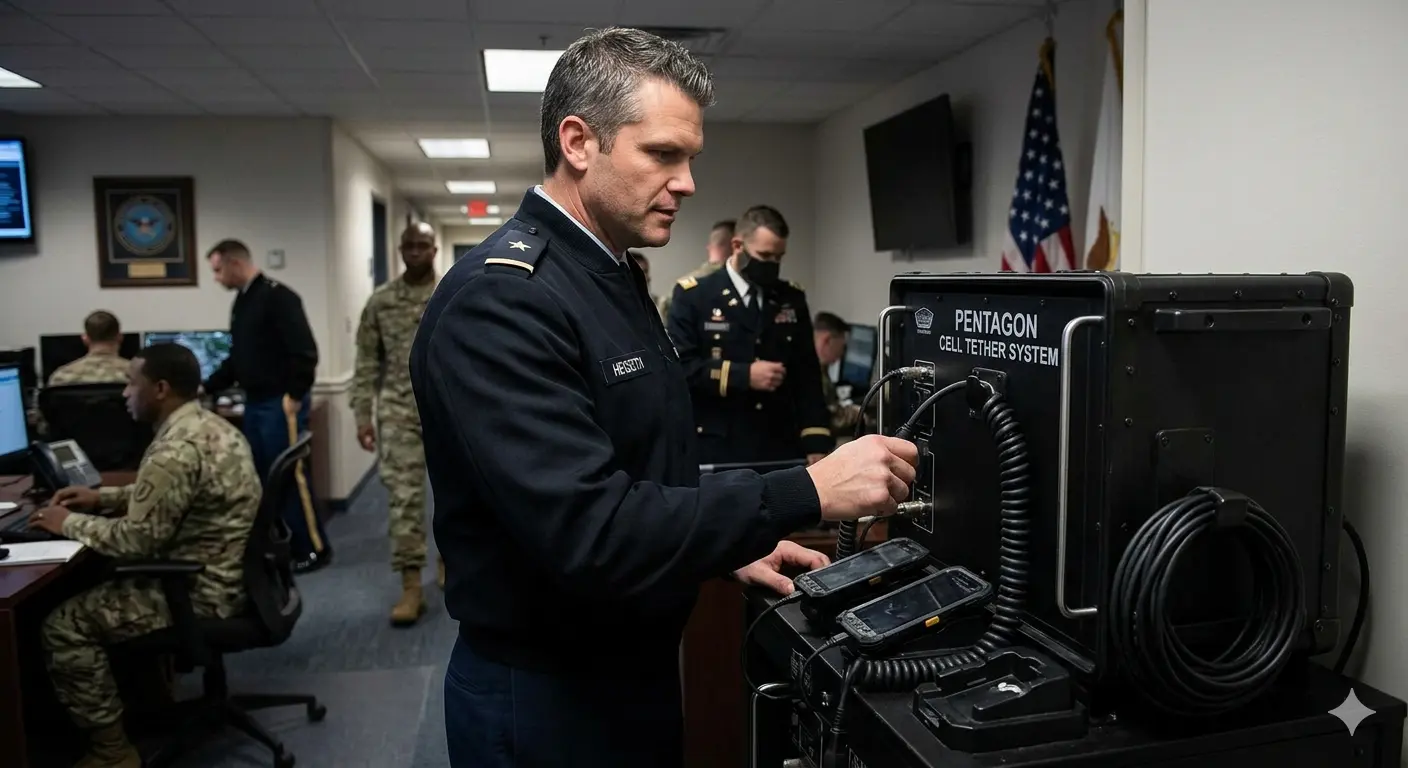
In modern defence environments, secure communication is no longer just a convenience—it is a critical pillar of national security. Military leaders, intelligence agencies, and defence departments rely on complex communication technologies designed to prevent interception, hacking, or unauthorised data leaks. Recently, growing discussion around the hegseth pentagon cell tether system has sparked curiosity among policy analysts, journalists, and technology observers interested in how the U.S. Department of Defense manages secure mobile communication.
The concept of the hegseth pentagon cell tether system revolves around the idea of controlling and securing mobile device connectivity within sensitive government facilities, particularly the Pentagon. As smartphones and mobile devices become essential tools for communication and coordination, the challenge is ensuring that these devices remain secure while still allowing officials to stay connected.
This topic has attracted attention not only because of its technological implications but also because it highlights broader questions about cybersecurity, operational secrecy, and the balance between accessibility and protection in military environments. Understanding how such systems work provides insight into the evolving landscape of defence communications and the increasingly sophisticated measures taken to safeguard national security infrastructure.
The Growing Importance of Secure Communication in the Pentagon
In today’s digital landscape, the Pentagon faces constant cybersecurity threats from foreign adversaries, independent hackers, and sophisticated espionage networks. Every device connected to a network represents a potential entry point for cyber intrusion. For this reason, military facilities operate under strict communication protocols designed to minimise vulnerabilities.
Historically, the Pentagon relied primarily on wired communication systems and specialised encrypted networks. However, the rise of smartphones and mobile computing has changed how officials communicate during both routine operations and crisis situations. Mobile connectivity enables faster decision-making, instant messaging, and remote access to critical information.
This shift, however, introduces a challenge: smartphones are inherently vulnerable to surveillance and cyberattacks. Signals can be intercepted, devices can be compromised, and sensitive conversations could theoretically be exposed if communication channels are not tightly controlled.
The discussion surrounding the hegseth pentagon cell tether system reflects this reality. Systems designed to tether or control mobile devices within secure zones aim to ensure that smartphones cannot freely connect to external networks or transmit sensitive data without oversight.
In other words, such systems represent a technological attempt to combine convenience with strict security protocols.
Understanding the Hegseth Pentagon Cell Tether System
At its core, the hegseth pentagon cell tether system refers to a concept in which mobile devices inside highly sensitive government environments are connected through controlled communication infrastructure rather than unrestricted cellular networks.
A tethered system can function in several ways, including:
- Routing mobile traffic through secure government networks
- Restricting direct connections to commercial cellular towers
- Monitoring device activity within secure facilities
- Preventing unauthorised data transmission outside the network
In practice, this type of system may involve specialised hardware installed within buildings, encrypted gateways, and monitoring software that ensures all mobile communication follows approved pathways.
The purpose is not simply to limit access but to maintain visibility over digital communication occurring inside sensitive spaces.
This approach mirrors the broader cybersecurity strategy used across many defence institutions, where network segmentation and controlled access help reduce the risk of data leaks.
Why Mobile Devices Are a Security Risk in Military Facilities
Mobile devices are incredibly powerful tools, but they also present significant security risks—especially in environments where classified information is regularly discussed.
Several vulnerabilities make smartphones particularly concerning in high-security locations:
1. Signal Interception
Cellular signals can potentially be intercepted using specialised equipment. Even encrypted calls may reveal metadata, such as the time and location of communication.
2. Malware and Spyware
Mobile devices can be infected with spyware capable of recording audio, capturing messages, or activating microphones remotely.
3. Location Tracking
GPS and cellular signals can expose the physical location of users, which may reveal sensitive movement patterns.
4. Data Leakage
Apps, cloud services, or compromised networks could transmit confidential information outside secure systems.
Because of these risks, many government facilities enforce strict policies limiting mobile phone usage in secure areas. A tethered system offers an alternative to outright bans by allowing controlled communication rather than eliminating it completely.
The Role of Controlled Networks in Defense Infrastructure
The Pentagon operates some of the most advanced secure communication systems in the world. These systems are designed to ensure that classified information remains protected even during complex military operations.
A controlled network environment typically includes:
- Encrypted communication protocols
- Restricted device authentication
- Continuous monitoring for suspicious activity
- Segmentation between classified and unclassified networks
Within such an ecosystem, tethered mobile connectivity becomes part of a layered defence strategy.
Instead of allowing smartphones to operate independently on public cellular networks, devices may connect through internal infrastructure that routes traffic through secure gateways.
This approach allows security teams to:
- Monitor communication patterns
- Block unauthorised transmissions
- Apply encryption standards
- Detect potential threats in real time
By maintaining oversight of mobile traffic, defence agencies can reduce the likelihood of accidental leaks or deliberate espionage.
How Tethered Communication Systems Typically Work
Although details about specific Pentagon systems remain confidential, tethered mobile communication systems generally operate using a combination of network control technologies.
These often include:
Secure Base Stations
Specialised cellular base stations installed inside buildings can replace commercial towers, allowing communication to stay within secure infrastructure.
Encrypted Gateways
All outgoing communication may pass through encrypted gateways that inspect and secure data before it leaves the facility.
Device Authentication
Only authorised devices are allowed to connect to the network. Authentication protocols ensure that unknown or compromised devices cannot gain access.
Traffic Monitoring
Cybersecurity teams monitor network activity to identify unusual patterns that might indicate hacking attempts or data exfiltration.
Signal Control
Systems can restrict external signals, preventing devices from bypassing the secure network.
Such technologies create a controlled communication environment while still allowing officials to use mobile devices for operational coordination.
The Political and Media Attention Around the Topic
Public discussion surrounding the hegseth pentagon cell tether system has emerged largely through media commentary and policy debate about how military leaders manage communication security.
In recent years, the intersection of politics, media personalities, and defence policy has drawn attention to various aspects of Pentagon operations. Communication systems, in particular, have become a topic of interest because they sit at the intersection of technology, national security, and government transparency.
Observers often debate several questions:
- Should officials be allowed to use personal devices inside secure facilities?
- How much communication control is necessary for national security?
- What role does modern technology play in shaping defence infrastructure?
These discussions reflect broader concerns about cybersecurity in an era where digital threats are increasingly sophisticated.
While many technical details remain classified, the conversation itself highlights how communication technology has become central to defence strategy.
Balancing Security and Accessibility
One of the most challenging aspects of communication security is balancing strict protection with operational flexibility.
Military officials need to communicate quickly, coordinate across agencies, and access information in real time. Restricting communication too heavily could slow down decision-making during critical situations.
On the other hand, overly relaxed policies could expose sensitive information to cyber threats or surveillance.
A tethered communication system attempts to address this dilemma by allowing controlled connectivity. Instead of banning smartphones entirely, such systems enable secure communication under monitored conditions.
This balance reflects a broader trend in cybersecurity policy across government institutions.
Rather than eliminating technology, agencies increasingly focus on managing and securing it.
The Future of Secure Mobile Communication in Government
As technology continues to evolve, the challenge of securing mobile communication will only grow more complex.
Several trends are shaping the future of defence communication systems:
1. Advanced Encryption
Next-generation encryption methods will help protect voice and data transmissions from interception.
2. Artificial Intelligence Monitoring
AI-driven cybersecurity systems can detect suspicious network activity faster than traditional methods.
3. Secure Government Smartphones
Some governments are developing specialised smartphones designed specifically for classified environments.
4. Signal Isolation Technologies
Facilities may use advanced signal-blocking technologies to prevent unauthorised wireless connections.
The concept behind the hegseth pentagon cell tether system reflects these broader developments. As mobile devices become indispensable tools, defence institutions must continuously innovate to maintain security.
Conclusion
Secure communication remains one of the most critical components of modern national defence. The discussion surrounding the hegseth pentagon cell tether system illustrates how the Pentagon and other government institutions are adapting to a world where smartphones and digital networks play an essential role in daily operations.
While the exact technical details of such systems are often confidential, the general principle is clear: controlling how mobile devices connect to networks inside sensitive facilities helps protect classified information from cyber threats and surveillance.
The challenge lies in finding the right balance between accessibility and security. Military leaders must communicate quickly and efficiently, yet they must also ensure that their communication tools cannot be exploited by adversaries.
As cybersecurity threats continue to evolve, systems designed to manage mobile connectivity—such as the hegseth pentagon cell tether system—will likely become even more important. They represent a modern approach to defence communication, where technology is carefully integrated into a secure and controlled infrastructure designed to protect national security.
FAQs
1. What is the hegseth pentagon cell tether system?
The hegseth pentagon cell tether system refers to a concept involving controlled mobile connectivity within the Pentagon, where mobile devices connect through secure infrastructure instead of unrestricted public cellular networks.
2. Why does the Pentagon need controlled mobile communication systems?
Secure communication systems help protect classified information from cyber threats, signal interception, and unauthorised data transmission.
3. Are smartphones allowed inside the Pentagon?
Policies vary depending on the security level of specific areas. In highly classified zones, mobile devices are often restricted or controlled through secure communication systems.
4. How do tethered communication systems improve cybersecurity?
By routing mobile traffic through secure networks, monitoring activity, and restricting external connections, tethered systems reduce the risk of hacking or data leaks.
5. Will secure mobile communication systems become more common in government facilities?
Yes. As digital threats increase, governments worldwide are investing in advanced communication security technologies to protect sensitive information and maintain operational security.
