

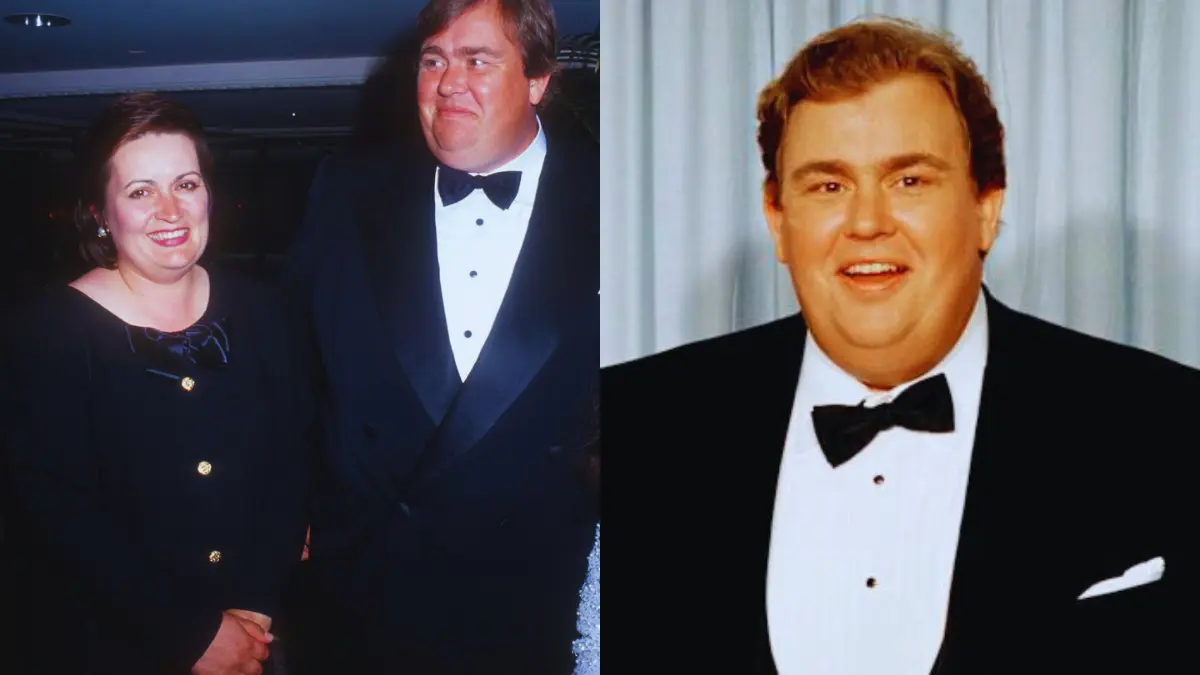
Rosemary Margaret Hobor has long been a quietly compelling figure in the story of one of North America’s most beloved comic actors. Seen by many primarily as the steady presence behind John Candy’s public life, Rosemary is much more than a star’s spouse: an artist, a mother, and a private person who helped shape a family while carving out her own creative life. This article explores the life, work, and legacy of Rosemary Margaret Hobor — where she came from, how she met and supported John Candy, her creative pursuits, and the lesser-known aspects of a woman who preferred the warm glow of a studio to the glare of the spotlight.
Early life and artistic roots
Rosemary Margaret Hobor background is rooted in a Canadian upbringing that fostered an early love for the arts. Born and raised in Toronto, she gravitated toward visual expression from a young age, eventually studying at arts institutions that helped refine her craft. Those early years — learning techniques, exploring ceramics and sculpture, and absorbing Toronto’s mid-20th-century cultural energy — laid the foundation for a lifelong commitment to making and teaching art. Her artistic identity would later coexist with life in the public eye after marriage, but she always retained that studio-first ethos: process, material, and the quiet satisfaction of a finished piece.
Her approach to art has often been described as tactile and patient — a sensibility that also influenced how she managed family life. The balance between being an artist and a caregiver shaped much of Rosemary’s adult choices and the way she navigated fame by focusing on craft and intimacy rather than public attention.
Meeting John Candy — a blind date that changed everything
The story of how Rosemary Margaret Hobor and John Candy met reads like a chapter from a classic romantic film: a blind date in the late 1960s that turned into a life-long partnership. They connected quickly, and while Candy’s career ascended to national and international fame, Rosemary’s steady presence at his side created a private anchor amidst the pressures of show business. Their relationship is often remembered for its blend of down-to-earth warmth and mutual respect — she provided stability and a sense of normalcy, and he admired and relied on her practical intelligence and creativity.
Their meeting and subsequent marriage illustrate how personal relationships can both shape and be shaped by public careers. Rosemary’s influence on John’s life was subtle rather than performative: the partner who fielded the calls, steadied the household, and quietly offered critique or encouragement when a project demanded it. Details surrounding their early courtship and marriage have appeared in profiles and retrospectives that explore Candy’s life and career.
Marriage, family life, and mothering away from the spotlight
Rosemary Margaret Hobor and John married in 1979 and built a family in parallel with Candy’s blossoming career. They welcomed two children — Jennifer and Christopher — and chose to raise them in a household that valued privacy, creativity, and family rituals. Rosemary’s role as a mother reflected the same thoughtful, craft-oriented approach she brought to her artwork: patient, detail-focused, and deeply invested in the emotional life of her children.
Although John’s work took him to movie sets and promotional events, Rosemary maintained a household that emphasized steadiness. The family lived for many years in Los Angeles, in neighborhoods where they could blend into a community rather than dwell in celebrity glare. That domestic balance mattered to both parents: John needed a stable base to recharge between demanding shooting schedules, and Rosemary valued a home that supported sustained creative practice alongside parenting.
An artist’s life: materials, exhibitions, and the private studio
While her marriage connected Rosemary to a high-profile cultural moment, her personal identity as an artist remained central. Accounts of her work describe a focus on ceramics, sculpture, and mixed media — a hands-on, materially driven practice that allowed her to express her aesthetic voice away from media scrutiny. Over the years she produced pieces for solo shows, contributed to local arts communities, and supported arts education in quieter, community-centered ways.
For many artists who share a life with a public figure, the creative practice becomes both refuge and statement: a reminder that identity isn’t solely defined by who you’re married to. Rosemary’s studio work became an essential part of her life narrative, and friends and collaborators recall someone who approached art with humility, patience, and a rigorous eye for form. That dedication kept her connected to a world of makers and learners even as the world outside that studio watched her husband’s performances.
Grief, resilience, and life after loss
The sudden death of John Candy in March 1994 was a profound turning point for the entire family. Suddenly widowed, Rosemary navigated grief while protecting her children and preserving the memory of a husband and father whose comic warmth had touched millions. Her response to that period — private, resolute, and deeply human — reflected a commitment to family continuity and to honoring John’s legacy in ways that matched the family’s wishes.
In the decades since, Rosemary has tended to remain out of the limelight, choosing private remembrance over public spectacle. She participated selectively in retrospectives or documentary projects when it felt appropriate, but for the most part preferred to let the work speak: continuing to make art, supporting her children’s lives, and quietly engaging with fans who reached out with memories and gratitude. Her resilience in the face of loss, lived away from paparazzi and press, illustrates a model of grace under pressure and an insistence on privacy as a form of dignity.
Influence, legacy, and cultural memory
Rosemary’s legacy can be read in two complementary ways. First, as the partner who helped sustain the family life that enabled John Candy to be the generous performer he was on screen; and second, as an artist and private citizen whose work and choices reflect a lifetime of making and caring. Cultural memory tends to favor the visible — the film, the joke, the red-carpet moment — but Rosemary’s influence is the quieter scaffolding that made some of that visibility possible.
She also serves as an example of how spouses of famous people can hold agency: preserving creative practices, raising children with an ethical center, and choosing how and when to engage with the archive of public memory. As documentaries and retrospectives revisit Candy’s life, Rosemary’s decisions about what to share and what to shield continue to shape how future audiences understand both the comic and the family behind him.
Lesser-known facts and human details
- Rosemary’s formal art training and interest in ceramics often surprise fans who only know her through celebrity biographies.
- She prioritized a private home life even during the height of Candy’s fame, turning down the impulse to capitalize on celebrity in favor of quiet continuity.
- Friends describe her as an excellent listener and a person who loved collaborative, community-based creative projects.
- The couple’s children — Jennifer and Christopher — have spoken in interviews about their parents’ warm family rituals and the central role of art in the household.
These small details help humanize a life that could otherwise be flattened by celebrity narratives. They reveal someone who resisted easy labels and chose the daily work of family and craft.
Why Rosemary Margaret Hobor still matters
In a media environment that prizes spectacle, Rosemary’s life is a reminder of the enduring value of privacy, craft, and family devotion. Her story encourages us to see the partner behind a public figure not simply as an appendage but as an individual with talents, commitments, and a life’s work. For those studying celebrity culture, her example complicates the usual narrative: influence can be quiet, presence can be domestic, and artistic life can coexist with the responsibilities of caregiving.
As film lovers revisit John Candy’s films and new audiences discover his work through streaming platforms and documentaries, there’s a renewed interest in the interpersonal histories that shaped him. Rosemary’s presence in that history is significant — not because she sought notice, but because her choices mattered. They gave shape to a family and supported a career that, decades later, continues to bring laughter and comfort.
Frequently Asked Questions (FAQs)
Who is Rosemary Margaret Hobor?
Rosemary Margaret Hobor is an artist and the wife of the late actor and comedian John Candy. She worked in ceramics and sculpture and maintained a private life focused on family and artistic practice.
When did Rosemary and John Candy get married?
Rosemary and John Candy married in 1979 after meeting in the late 1960s; they remained together until Candy’s death in 1994.
Does Rosemary Margaret Hobor have children?
Yes — Rosemary and John Candy had two children, Jennifer and Christopher. The family prioritized privacy while raising the children in a supportive, creative home.
What kind of art does Rosemary create?
Rosemary’s practice has centered on ceramics, sculpture, and mixed-media work. Her art is characterized by a hands-on approach and an emphasis on materiality and form.
Is Rosemary still active publicly today?
Rosemary has largely remained private in the years since John Candy’s death, occasionally participating in retrospective projects or interviews when appropriate, while primarily focusing on family and art.
Conclusion
Rosemary Margaret Hobor occupies a special place in the story of late-20th-century North American culture: both as the supportive partner of a towering comic talent and as a committed artist in her own right. Her life — marked by quiet creativity, steady mothering, and dignified privacy after loss — offers a lens through which to reconsider fame, art, and the everyday courage of keeping a family and a studio intact. Whether you know her name because of John Candy or because you’ve come across her artwork, the contours of Rosemary’s life reward a closer look: a life shaped by material craft, familial devotion, and the courage to remain private in a public world.
